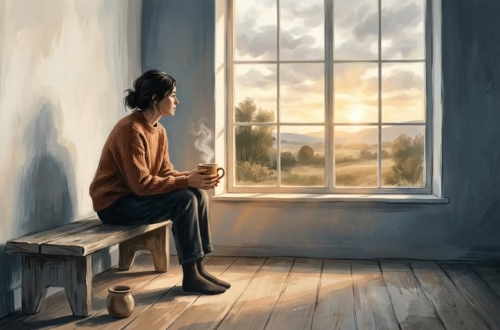

The clock on the microwave reads 3:18 AM, casting a faint green number across the dark kitchen counter. You are sitting on the edge of a wooden chair with a blanket pulled over your shoulders, holding a mug of water you forgot to drink an hour ago. The house is completely quiet, except for the hum of the refrigerator and the sudden, sharp buzz of your phone vibrating against the table.
Your stomach drops before you even look at the screen. You already know what it is. Another missed call, another half-coherent text, or the eerie, hollow silence that follows when someone you love has vanished into the night again.
You do not stay awake because you enjoy misery. You stay awake because a stubborn, desperate voice in your chest insists that if you close your eyes, the worst will happen. You believe that your sleeplessness is a shield, that your worry has protective power, and that as long as you stay on guard, you can keep the disaster at bay.
This is the quiet, exhausting reality of loving someone who is determined to destroy themselves. It is a lonely kind of heartbreak because nobody throws a funeral for a tragedy that unfolds in slow motion every single week.
The Unspoken Trap of Becoming the Rescuer
It usually begins with good intentions. You love this person. You remember who they were before the darkness took over, or you see the brilliant, gentle soul buried beneath their chaos. You believe, with every fiber of your being, that love can be a medicine. You think that if you are patient enough, kind enough, and forgiving enough, you can love them into healing.
Without noticing when the transition happened, your relationship stops being a partnership and turns into a salvage operation. You become their unpaid emergency contact, their crisis manager, their alibi, and their shield against the world.
You lend money you cannot afford to lose. You lie to friends or family to cover up their mistakes. You drive across town in the middle of a work day because they made another reckless decision. You clean up the broken glass in the kitchen while they sleep off the consequences in the next room, convincing yourself that you are being supportive.
What you do not see in those moments is that your rescue efforts are not saving them; they are only delaying the reckoning. Every time you cushion their fall, you rob them of the only thing that might actually force a change: the cold, unvarnished weight of their own choices.
The Slow Erosion of Your Own Shoreline
Loving someone who refuses to save themselves does not just break your heart; it slowly erases your own life.
Your conversations with other people become hollow because your mind is constantly somewhere else, wondering where they are, what mood they are in, and what fire you will have to put out next. You feel a strange guilt whenever something good happens in your own life. Getting a promotion, enjoying a sunny afternoon with friends, or having a peaceful dinner feels like a betrayal because the person you love is drowning.
You stop planning for the future. How can you plan a trip next month or save for a house next year when your entire existence is governed by whether tomorrow will bring peace or a crisis? You live in twenty-four-hour increments, walking on eggshells, measuring your words, and holding your breath.
Then comes the morning you look in the bathroom mirror while brushing your teeth and do not recognize the hollow eyes looking back at you. Your hair is uncombed, your shoulders are permanently tight, and you realize you have spent the last two years setting yourself on fire just to keep another person warm.
Why Love Cannot Be a Lifejacket
There is an essential rule taught to open-water lifeguards that sounds ruthless until you understand the reality of drowning: when a panicking person is thrashing in deep water, they will climb on top of anyone who swims out to help them. They are not acting out of malice; they are terrified. But in their terror, they will push their rescuer beneath the surface to keep their own mouth above water.
That is what happens when you try to save someone who has surrendered to their own ruin. They take your patience and ask for more. They take your savings and demand another loan. They take your peace and replace it with their chaos.
The hardest truth you will ever confront is that love, no matter how pure, how deep, or how unconditional, lacks the authority to change someone who does not want to change. You can offer understanding, but you cannot give someone the will to live. You can offer a clear path, but you cannot walk the steps for them. You cannot want someone’s survival more than they want it for themselves.
The Agony of Letting Go of the Rope
There comes a day when you realize your hands are raw, bleeding, and trembling from holding on to the rope. You are standing on the edge of the cliff, being dragged downward inch by inch, while the person dangling below refuses to plant their feet against the rock.
Dropping the rope feels like murder. It feels like betrayal. Your mind screams that you are giving up, that you are selfish, that you promised to be there through thick and thin. You fear that if you let go, they will hit the bottom, and you will carry the guilt for the rest of your days.
Yet letting go is not an act of cruelty. It is an act of surrender to reality. It is admitting the painful truth: you never had the power to save them in the first place.
Letting go does not mean you stop caring. It does not mean you hate them. It means you stop participating in their destruction. It means you step back, let the consequences land where they belong, and allow life to be their teacher instead of sacrificing your own soul as a buffer.
Walking Back to Dry Land
The silence after you step back is loud and unfamiliar. For weeks, your phone will feel like a live wire in your pocket. Every notification will make your chest tighten. You will want to check in, to offer one more favor, to make sure they are still breathing.
In those moments, sit on your hands. Pour a hot cup of tea. Notice the air filling your lungs. Remember what it feels like to live in a room where you do not have to manage an emergency every forty minutes.
You are allowed to mourn the person they could have been. You are allowed to weep for the story that did not get a happy ending. But you are also allowed to live. You are allowed to sleep through the night without checking your phone at 3:00 AM. You are allowed to be happy, to laugh out loud, and to build a life on solid, quiet ground.
You were never meant to be someone else’s savior. You were only ever meant to live your own life with honesty and care. And choosing to survive is the bravest thing you will ever do.
A Quiet Companion for Grief & Healing
If you are learning to let go of people you cannot save, or carrying the quiet heartbreak of watching someone slip away, read Anudeep Paladugu’s reflective poetry and prose collection, Her Name in Every Silence.

Anudeep Paladugu is a writer and author of Her Name in Every Silence and No Record of Her. He writes honest, unedited reflections on emotional recovery, love, and the human experience.