
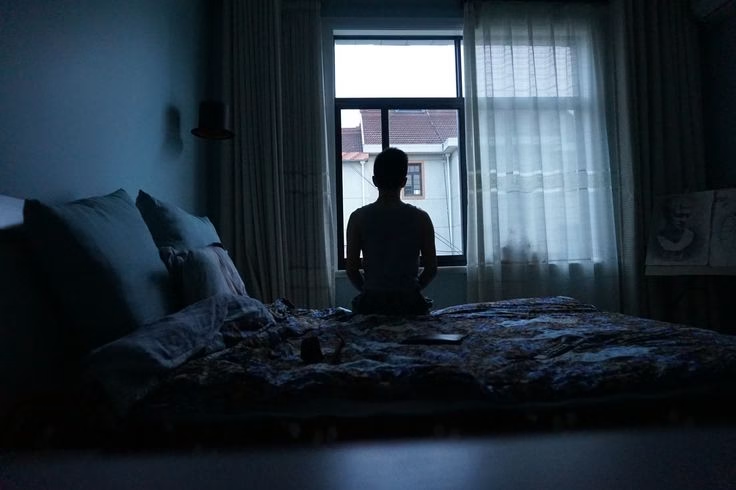
It often shows up without warning.
Not during a breakdown. Not in the middle of a crisis. Just while doing something normal. Standing in the kitchen. Opening a laptop. Sitting in traffic. Folding clothes.
“I can’t do this anymore.”
The thought feels sudden, but it isn’t new. It has been waiting. Quiet. Patient. It slips in during moments when there is nothing urgent demanding attention.
The sentence does not feel dramatic. It feels tired. Almost factual. Like an observation the mind has made after watching the same pattern repeat for too long.
Many people hear it and immediately dismiss it. They tell themselves it is just a bad day. Or a long week. Or stress talking. So they keep moving.
But the sentence keeps coming back.

At first, the thought seems attached to something specific. Work. A responsibility. A situation that feels draining. It feels like if that one thing changed, the sentence would disappear.
But after a while, it stops being about any single thing.
The mind says “this,” but it does not explain what “this” is. It just feels heavy. Everything feels heavy. Even things that used to feel neutral now carry weight.
Getting up feels harder than it used to. Not impossible. Just slower. Like the body and mind are negotiating every movement.
Small tasks feel crowded. There is always another thing to remember. Another thing waiting. Another thing that cannot be postponed without consequences.
Rest does not feel clean anymore. Even while resting, the mind stays alert. It replays conversations. Rechecks decisions. Mentally prepares for things that have not happened yet.
The thought returns.
“I can’t do this anymore.”
It does not feel like wanting to stop life. It feels like wanting a pause that actually pauses something inside.
There is often confusion mixed into this feeling. People wonder why they feel this way when they are still functioning. Still showing up. Still doing what is expected.
From the outside, everything looks mostly fine.
Inside, it feels like constantly holding your breath without realizing it.
The mind becomes crowded. Thoughts overlap. Nothing feels fully finished. Even when something is completed, it does not bring relief. There is always the next thing.
Silence becomes uncomfortable. Not because it is loud, but because it gives the mind space to repeat the same sentence again.
Nighttime is often when it gets louder. Lying in bed, staring at the ceiling, feeling tired but not sleepy. The body wants rest. The mind wants answers it cannot find.
People scroll. Or replay shows they have already seen. Or stare at their phones without reading anything.
Anything to avoid hearing the thought clearly.
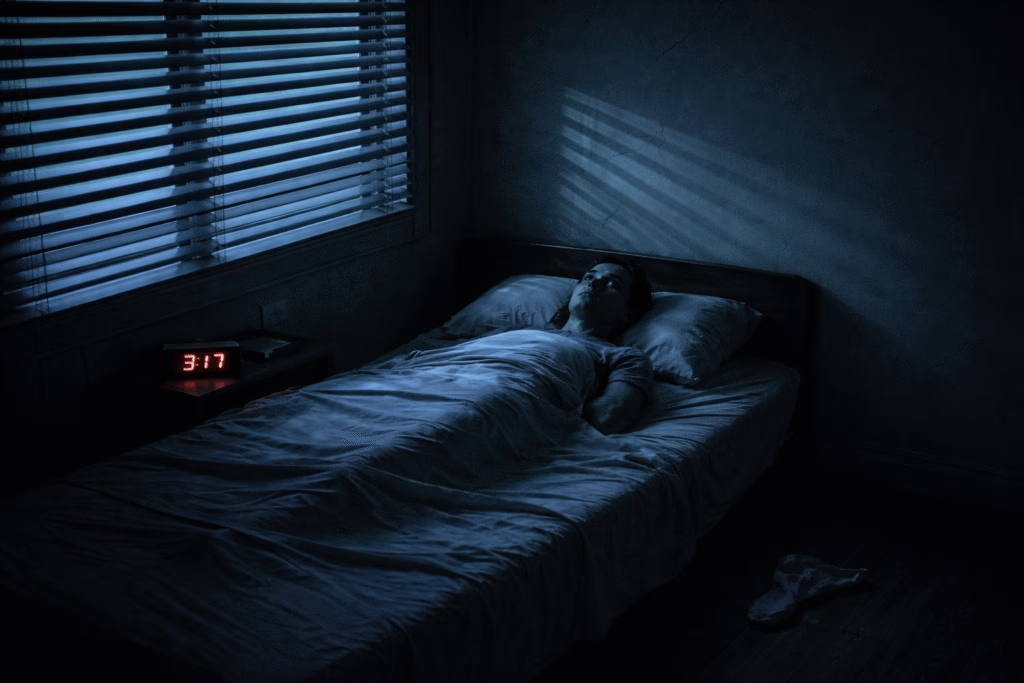
During the day, the feeling hides better.
There are conversations. Emails. Chores. Noise. The mind stays busy enough to push the thought into the background.
But it leaks out in small ways.
Shorter patience. Delayed replies. A lack of enthusiasm that others notice but do not question. A feeling of being present physically but elsewhere mentally.
Sometimes there is guilt attached to the thought. A sense that thinking “I can’t do this anymore” means being ungrateful or weak.
So the sentence is judged silently. Pushed away. Replaced with forced positivity or logic.
Others have it worse.
You should be able to handle this.
Just get through today.
The mind listens, but it does not change.
The sentence is not asking for motivation. It is not looking for encouragement. It is expressing something much simpler.
Exhaustion.
Not the kind that sleep fixes. The kind that comes from carrying too much internally for too long without naming it.
Mental exhaustion often looks boring. It does not collapse loudly. It just dulls things slowly.
Joy still exists, but it feels distant. Achievements feel flat. Even good news lands softly and disappears quickly.
There is a constant feeling of being behind, even when nothing specific is late.
Behind emotionally. Behind mentally. Behind yourself.
The sentence plays again.
“I can’t do this anymore.”
And yet, the days continue.
This is what makes it feel so confusing. The mind insists it cannot keep going, but it does. It adapts. It pushes. It survives.
That survival starts to feel like the problem.
There is no clear moment where things fall apart. No obvious sign that justifies the weight of the thought. So it remains unspoken.
It becomes something people live with rather than something they talk about.
The sentence becomes familiar. Almost background noise. Something that shows up, gets acknowledged briefly, then ignored again.
Until it returns.
Not louder.
Just unchanged.
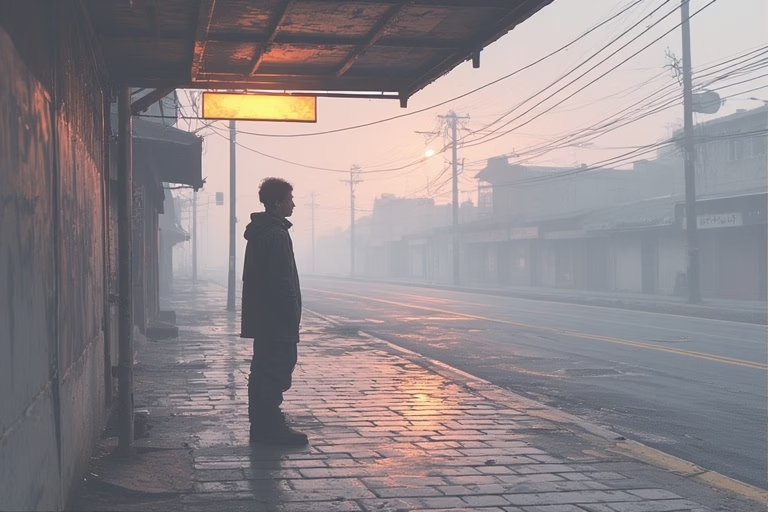
What makes this thought so persistent is that it does not come with instructions. It does not explain what needs to stop or change.
It simply says that something has gone on for too long.
The mind reaches a point where continuing feels heavier than stopping, but stopping does not feel possible either. So it stays suspended between the two.
Functioning, but strained.
Present, but detached.
Alive, but tired of holding everything together internally.
“I can’t do this anymore” is not a dramatic declaration. It is not a final decision. It is a quiet mental signal that something inside has reached its limit without ever being asked where that limit was.
The thought lingers because it has nowhere to go.
It is not a conclusion. It is a sentence that ends without a period.
And so it repeats.